

Larry Conte
Owner & Industry Expert, Aaron Overhead DoorsLarry Conte is an industry veteran with over 20 years of experience in garage door installation, repair, and custom design. As the operating leader of Aaron Overhead Doors in Monterey, CA, Larry is known by industry peers as "Larry Legend" for his high-quality craftsmanship and customer-first approach. Today, he shares his decades of expertise to help homeowners make safe, informed decisions about their garage doors.
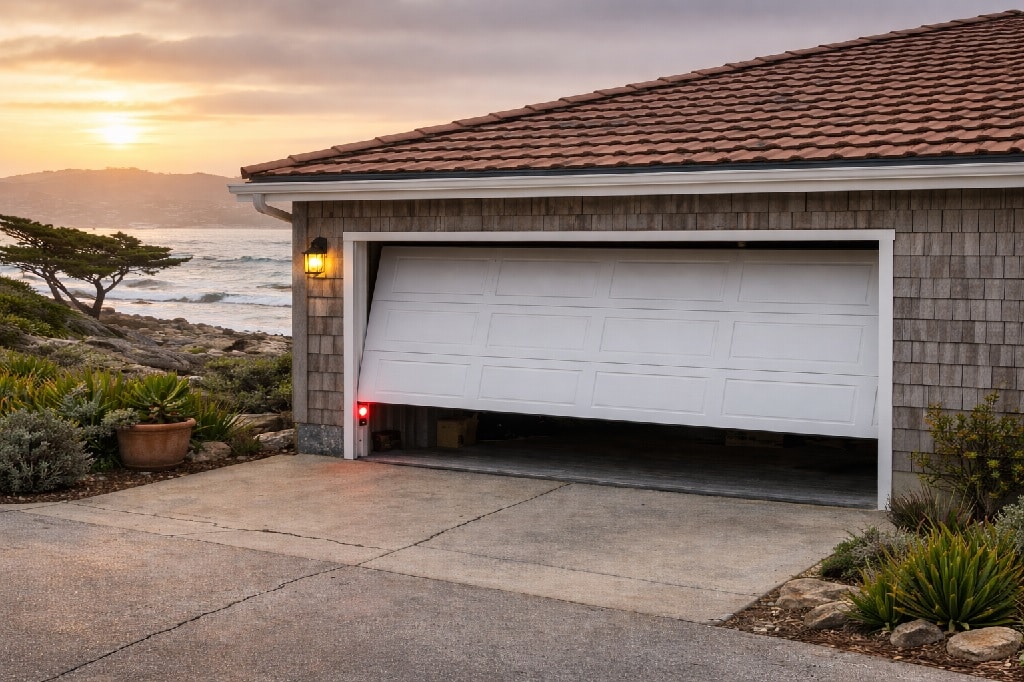
Why Won’t My Garage Door Close All the Way?
If your garage door starts down, hesitates, and then reverses, or stops just a few inches from the floor, you’re dealing with one of the most common (and misunderstood) garage door problems homeowners face along the Central Coast. From Monterey’s salty air to Santa Cruz’s coastal fog and older housing stock, local conditions play a bigger role in this issue than most generic advice online acknowledges.
This guide goes beyond the usual “check the sensors” advice. We’ll explain why garage doors behave this way, how modern openers are designed to think, and what Central Coast homeowners should look for specifically before the problem turns into a safety risk or a costly repair.
How Your Garage Door Decides When to Stop
Modern garage door openers don’t just open and close. They interpret resistance.
Every time your door moves, the opener is measuring force, speed, and consistency. If something changes, friction, balance, alignment, the opener assumes there may be a person, pet, or object in the way and reacts by stopping or reversing.
In other words:
A garage door that won’t close all the way is often working exactly as designed, it just doesn’t like what it’s feeling.
Understanding this helps homeowners avoid two common mistakes:
- Over-adjusting settings without fixing the real issue
- Ignoring early warning signs until a spring or opener fails
Central Coast–Specific Reasons Garage Doors Don’t Close Fully
1. Salt Air and Coastal Moisture Increase Rolling Resistance
In coastal communities from Pacific Grove to Capitola, salt-laden air accelerates corrosion on:
- Roller bearings
- Hinges
- Torsion spring coils
- Track surfaces
Even light surface rust can increase friction just enough for the opener to sense resistance and reverse. This often happens gradually, which is why many homeowners say, “It worked fine last month.”
Unique local indicator: If the door closes fully on dry inland days but reverses during foggy mornings or after marine layer overnight moisture, corrosion-related drag is likely involved.
2. Seasonal Door Expansion in Coastal Climates
Garage doors, especially steel-backed or wood-overlay models, expand and contract with temperature and humidity.
Along the Central Coast, we experience:
- Cool nights
- Mild but humid mornings
- Warm afternoon sun
This daily cycling can cause the door to:
- Sit slightly wider in the tracks
- Bind near the floor seal
- Contact the jamb unevenly
This is why some doors stop only at the very bottom, even though tracks and sensors appear fine.
3. Micro-Misalignment of Photo Eyes (Not Just “Blocked Sensors”)
Most articles say, “Clean or realign your sensors.” What they don’t explain is why sensors drift out of alignment.
In many Central Coast garages:
- Concrete slabs settle unevenly over time
- Coastal soil expands and contracts
- Minor seismic activity subtly shifts framing
This can tilt a sensor bracket just enough that the beam weakens at the final inches of travel. Triggering a reversal only at the bottom.
Tip: If your opener lights blink only after the door reaches near-closed position, suspect beam degradation rather than a total blockage.
4. Door Balance Changes That Are Invisible to Homeowners
A properly balanced garage door should stay in place when lifted halfway by hand. But balance doesn’t fail all at once.
In coastal environments, torsion springs can:
- Lose torque unevenly
- Corrode internally before snapping
- Perform inconsistently depending on temperature
When balance shifts subtly, the opener feels increased load near the floor, exactly where leverage is weakest and stops the door as a safety response.
5. Travel Limits Are Often a Symptom, Not the Cause
Many homeowners try adjusting the down travel limit. Sometimes this works temporarily but often it masks a deeper issue.
If limits need repeated adjustment, it usually indicates:
- Track friction
- Door weight imbalance
- Roller degradation
- Structural settling
Over-adjusting limits can actually disable safety protections, increasing the risk of door damage or injury.
When This Problem Becomes a Safety Issue
A garage door that won’t close fully is more than an inconvenience.
It can:
- Leave your home unsecured overnight
- Strain the opener motor
- Cause cables to jump drums
- Lead to sudden spring failure
If your door:
- Slams shut manually
- Reverses inconsistently
- Requires repeated remote presses
…it’s time for a professional inspection.
What Makes Central Coast Garage Doors Different
Homes in Monterey, Carmel, Aptos, and Santa Cruz often feature:
- Older door systems paired with newer openers
- Custom or non-standard door sizes
- Wood or composite doors sensitive to moisture
Generic national advice doesn’t account for these variables. The local garage door technicians at Aaron Overhead Doors understands how coastal exposure, housing age, and regional construction practices affect door performance.
What to Check Safely Before Calling a Professional
- Wipe photo eye lenses with a dry microfiber cloth
- Inspect tracks for visible debris or corrosion
- Observe whether the door closes smoother manually than automatically
Avoid:
- Adjusting torsion springs
- Increasing force settings aggressively
- Bypassing safety sensors
When to Call the Central Coast Garage Door Experts at Aaron Overhead Doors
If your garage door won’t close all the way and the cause isn’t immediately obvious, professional diagnostics can prevent bigger failures.
The local expert at Aaron Overhead Doors can:
- Measure door balance and spring torque
- Identify corrosion-related wear unique to coastal homes
- Align tracks and sensors based on structural realities, not generic specs
If you live between Monterey and Santa Cruz and your garage door is acting unpredictably, getting a local, experience-based assessment is often the fastest path to a reliable fix.
Call Aaron Overhead Doors at 831-219-8648 whenever you have garage door problems and get a free estimate or contact us online to shcedule service.
This Is Usually a Warning, Not a Fluke
In most Central Coast homes, a garage door that won’t close all the way is an early warning system doing its job.
Addressing it early protects:
- Your door
- Your opener
- Your home’s security
And most importantly, it keeps your family safe.