

The Ultimate Guide to a More Efficient Garage Door on the Central Coast from Monterey to Santa Cruz
If you live anywhere between Monterey and Santa Cruz, you know our weather is unique. We don’t deal with the baking 100-degree heat of inland California, nor do we get the freezing snow of the Sierras. Instead, we have our famous marine layer, salty ocean breezes, foggy mornings, and damp winter nights.
Because of this, most of the garage door efficiency guides you read online completely miss the mark for us.
They focus purely on keeping out blazing summer heat. But if you live in Capitola, Seaside, or Aptos, an efficient garage door does much more than that. It needs to keep out the damp chill, resist rust from the salty air, and lower your energy bills all at once.
If you’re looking to make your garage door more efficient—whether your garage is a home gym, a workshop, or just where you park your car—here is everything you actually need to know for the Central Coast.
1. Insulation: It’s About Dampness, Not Just Heat
A lot of articles will tell you to look at the R-value (which measures how well insulation stops heat). That’s important, but the type of insulation matters just as much for coastal homes.
There are two main types of garage door insulation:
-
Polystyrene (Styrofoam): This comes in rigid panels that slide into the door. It’s affordable and adds a decent amount of efficiency.
-
Polyurethane (Spray Foam): This is sprayed directly into the door’s panels, expanding to fill every single crack and corner.
The Central Coast Secret
Go with Polyurethane. Why? Because polyurethane is a closed-cell foam. This is a game-changer for our climate.
It acts as a built-in vapor barrier, meaning it won’t absorb the heavy moisture from our morning fog. It keeps the damp chill out of your garage, prevents mold growth inside the door panels, and physically stiffens the door to protect against strong coastal winds.
2. Fight the Salt: Choose the Right Materials
Here is something most general California guides forget to mention: salt air destroys standard steel.
If you live close to the water in places like Pacific Grove or Santa Cruz, a standard uninsulated steel door isn’t just terrible for energy efficiency; it’s a magnet for rust. When a door rusts, the joints stiffen, the motor works harder, and the door loses its tight seal against the weather.
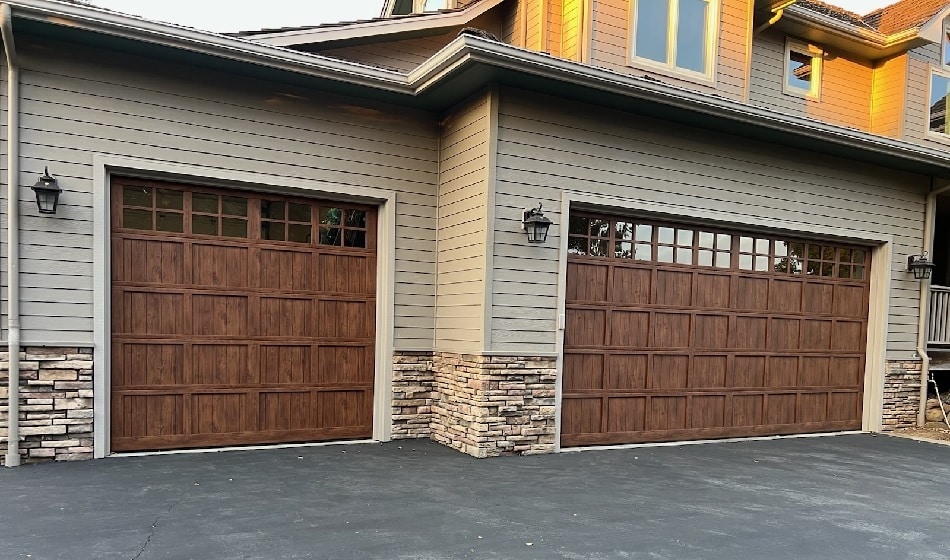
Pro Tip: For maximum long-term efficiency, consider a composite, vinyl, or aluminum and glass garage door. Composite doors look exactly like real wood but are packed with heavy-duty insulation and will never rot, warp, or rust in the salty ocean air. If you do go with steel, make sure it is a multi-layer insulated door with a factory-applied baked-on rust-proof coating.
3. The Power of The Seal (Weatherstripping)
You can buy the most expensive, highest R-value garage door on the market, but if daylight is peeking in through the sides and bottom, you are wasting your money.
The heavy marine layer can easily seep right under a worn-out bottom seal, making your garage feel like a damp cave.
-
The Bottom Seal: Upgrade to a heavy-duty, U-shaped astragal seal. This rubber gasket compresses when the door hits the ground, forming a watertight and airtight barrier against coastal moisture and wind.
-
Perimeter Seals: Check the vinyl weatherstripping around the sides and top of the door frame. If it’s cracked, brittle, or missing, replacing it is a cheap DIY project that instantly boosts your garage’s efficiency.
4. Upgrade Your Windows or Ditch Them
Windows make a garage door look great and let in natural light, but single-pane glass is a massive leak for your home’s thermal energy.
If you want windows, make sure you order insulated (double-pane) glass. For an extra efficiency boost, ask for Low-E (low-emissivity) glass. Low-E coatings reflect the sun’s UV rays on those rare, hot late-summer days, but help trap your home’s radiant heat inside during chilly winter nights.
5. Don’t Ignore the Motor: Electrical Efficiency Matters
When people talk about a more efficient garage door, they almost always talk about insulation. But what about the electricity you’re using?
Older garage door openers use AC (Alternating Current) motors. They are loud, clunky, and use a lot of power.
The Fix: Upgrade to a modern DC (Direct Current) motor. DC motors use significantly less electricity, run almost silently (perfect if you have a bedroom above the garage), and offer smoother starts and stops, which extends the life of the door itself.
6. Smart Tech: The Auto-Close Timer
Have you ever accidentally left your garage door open overnight? Not only is it a security risk, but you just let 50-degree foggy air seep into your house’s shared walls for eight hours. Your HVAC system has to work overtime to fix that mistake.
Modern smart openers (like those with myQ technology) allow you to set an auto-close timer. You can tell the system, “If the door is open for more than 30 minutes, close it automatically.” This simple feature acts as a fail-safe to protect your home’s thermal envelope.
Ready to Upgrade Your Coastal Garage?
Making your garage door more efficient on the Central Coast requires a slightly different playbook than the rest of California.
By focusing on moisture-blocking polyurethane insulation, rust-proof materials, high-quality weatherstripping, and energy-efficient motors, you’ll create a garage space that is comfortable, quiet, and perfectly suited for the beautiful (but damp!) Monterey Bay climate.
Ready for a quieter, drier, and more energy-efficient garage?
Don’t let another foggy morning chill your home or drive up your electric bill. Whether you need a simple weatherseal replacement or a full high-efficiency upgrade, the local Central Coast experts at Aaron Overhead Doors are here to help.
Call us at 831-219-8648 to speak with a Monterey Bay specialist to shcedule your garage door service or contact us online with any questions.