

Larry Conte
Owner & Industry Expert, Aaron Overhead DoorsLarry Conte is an industry veteran with over 20 years of experience in garage door installation, repair, and custom design. As the operating leader of Aaron Overhead Doors in Monterey, CA, Larry is known by industry peers as "Larry Legend" for his high-quality craftsmanship and customer-first approach. Today, he shares his decades of expertise to help homeowners make safe, informed decisions about their garage doors.
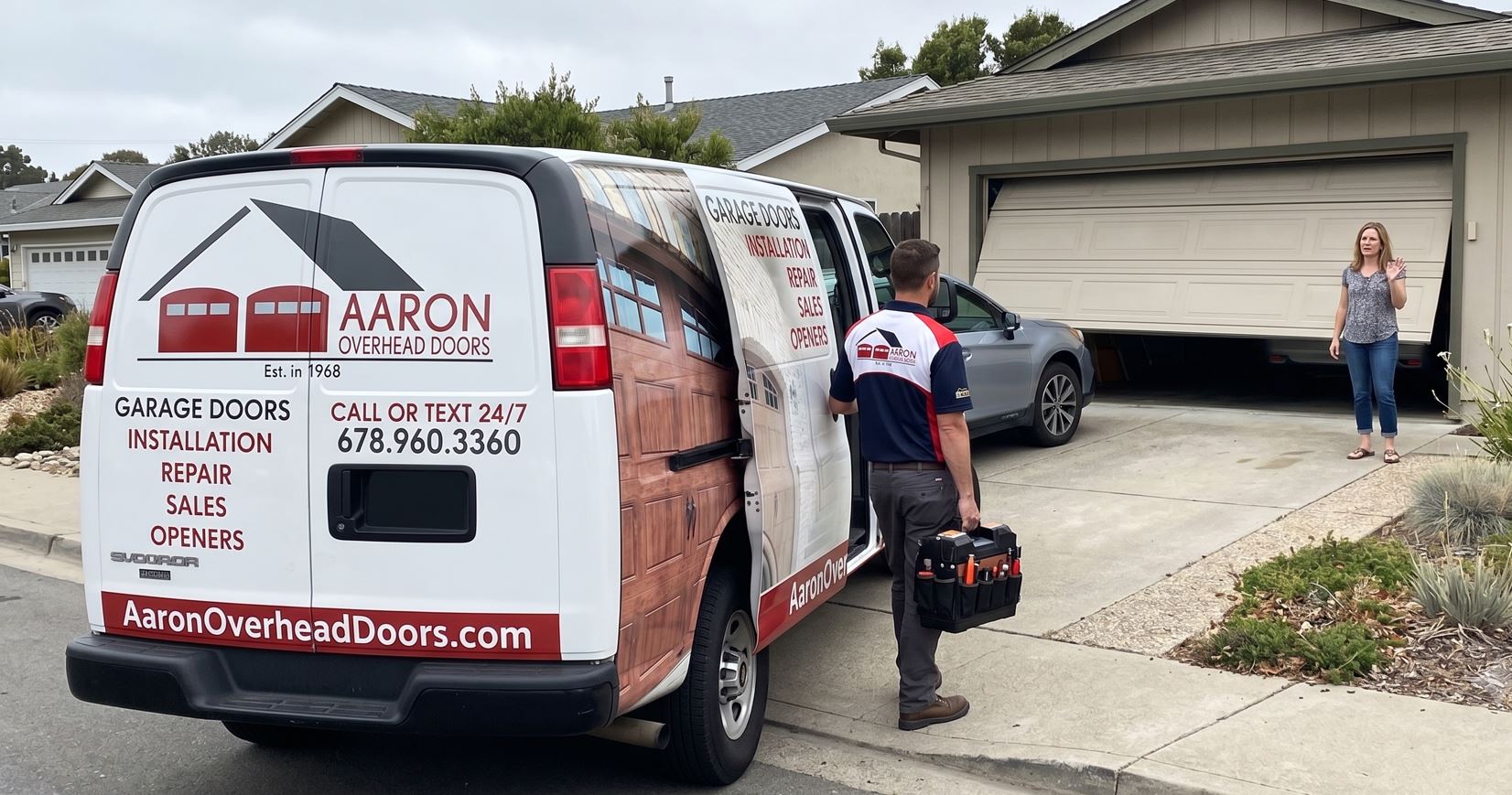
A Central Coast Troubleshooting Guide When Your Garage Door Stops Halfway
Imagine heading out your door in Monterey or rushing to beat the morning traffic on Highway 1 out of Santa Cruz, hitting your garage door remote, and watching the door stall out right at eye level.
When a garage door stops halfway, either going up or coming down, it's annoying but it usually means your door’s built-in safety system telling you something is wrong.
While national repair sites give generic advice, coastal homeowners from Santa Cruz down to Monterey, Pacific Grove, Carmel, and Aptos deal with unique local factors, like salty air, dense morning fog, rust, and heavy ocean winds, that trip up garage doors in ways inland homes never experience.
Here is a simple, step-by-step guide to figure out why your garage door stopped halfway and how to safely fix it from Aaron Overhead Doors Monterey.
Quick Diagnostic: Is Your Door Stopping Going Up or Coming Down?
Before grabbing a flashlight, notice the direction your door was moving when it stuck.
This single detail eliminates half the possibilities:
-
Stops halfway while CLOSING: Almost always a safety sensor, track obstruction, or force limit issue.
-
Stops halfway while OPENING: Usually points to a broken or fatigue-weakened spring, snapped cable, or binding track.
5 Common Reasons Garage Doors Stop Halfway and Central Coast Fixes
1. Central Coast Fog & Moisture on the Photo-Eye Lenses
Every garage door made after 1993 uses infrared safety sensors ("photo-eyes") mounted near the floor on both sides of the track. If anything breaks the invisible beam between them, the door stops and reverses instantly.
-
The Standard Cause: Dirty lenses, spider webs, or misaligned brackets.
-
The Central Coast Factor: Marine layer fog. On damp mornings from Santa Cruz to Monterey, fine moisture droplets condensation-coat the sensor lenses. The infrared beam refracts through the water layer, making the sensor think a person or object is blocking the door.
-
How to Fix It: Wipe both sensor lenses with a dry microfiber cloth. If the indicator lights on the sensors flicker or go dark, adjust the mounting brackets until both lights stay solid.
2. Salt-Air Corrosion & Micro-Friction Mid-Travel
Your opener has an internal safety setting called the force limit. If the motor feels more resistance than expected while lifting or lowering the door, it shuts off to avoid burning out or crushing something.
-
The Standard Cause: Dry rollers or slightly bent tracks.
-
Why This Happen on the Central Coast: Salt-air rust. Homes within a few miles of Monterey Bay experience rapid oxidation on bare metal tracks, steel rollers, and hinges. This creates rough, microscopic rust patches along the track bend. As the rollers hit these rough spots halfway up, the sudden drag triggers the opener’s force sensor, causing the door to stall.
-
How to Fix It: Inspect your tracks for a reddish haze or gritty buildup. Never use WD-40 (it attracts sand and grit). Instead, spray a silicone-based lubricant or lithium grease along the rollers, hinges, and track curve.
3. Coastal Wind Loading & Track Binding
The Monterey Bay coastline is famous for afternoon sea breezes. When heavy winds blow directly against garage doors, especially wider two-car doors or uninsulated models, they bow inward slightly.
-
The Fix: If your door only sticks during windy coastal afternoons, the door panels are flexing in the track. Upgrading to a wind-rated door or adding horizontal strut reinforcement prevents panel flex and eliminates mid-travel jams.
4. Weak or Fatigued Torsion Springs
Garage door springs do 90% of the heavy lifting; the motor simply guides the movement. Standard springs are rated for roughly 10,000 cycles (about 7 to 10 years of average daily use).
-
The Symptom: If your opener struggles and quits halfway up, or if you hear a loud bang in the garage, a spring may have snapped or lost tension. Coastal humidity speeds up spring metal fatigue through microscopic pitting.
-
How to Check (50% Balance Test):
-
Pull the red emergency release cord to disconnect the door from the opener.
-
Manually lift the door halfway up by hand and let go.
-
A balanced door will stay suspended roughly 3 to 4 feet off the ground. If it slams down, the springs have lost tension or broken.
-
Safety Warning: Torsion springs are under extreme tension. Never attempt to tighten or replace garage door springs yourself, always call a trained professional because of the dangers of springs.
5. Out-of-Adjustment Opener Travel Limits
Inside your opener motor unit are limit switches that tell the door how far to travel before stopping. Electrical surges or physical wear on plastic drive gears inside older openers can throw off these travel limits, causing the opener to "think" halfway is the floor.
-
How to Fix It: Locate the adjustment screws on the side or back of your opener motor (marked "UP Limit" and "DOWN Limit"). Turn the screw in small increments toward the (+) sign to extend travel distance.
At-a-Glance Troubleshooting Checklist
When to Call a Local Central Coast Pros at Aaron Overhead Doors
While wiping off a foggy sensor or spraying silicone lubricant is an easy Saturday DIY task, mechanical issues require professional tools and training:
-
Broken Springs or Snapped Cables: High-tension components can cause severe injury if handled without proper winding bars and safety gear.
-
Persistent Stalling After Lubrication: Points to internal motor gear stripping or bent tracks that need precision alignment.
-
Loud Grinding Noises: Indicates worn bearings or stripping drive belts/chains inside the opener.
If you’ve wiped your sensors, cleared the tracks, and your door still hangs halfway, contacting a local garage door specialist ensures your home stays secure and your family stays safe.
Need Help Now?
Call Aaron Overhead Doors at 831-219-8648 and schedule your garage door repair service or contact us online with any questions.
We're availabe 24/7 from Monterey to Santa Cruz.