

Larry Conte
Owner & Industry Expert, Aaron Overhead DoorsLarry Conte is an industry veteran with over 20 years of experience in garage door installation, repair, and custom design. As the operating leader of Aaron Overhead Doors in Monterey, CA, Larry is known by industry peers as "Larry Legend" for his high-quality craftsmanship and customer-first approach. Today, he shares his decades of expertise to help homeowners make safe, informed decisions about their garage doors.
A Guide to Garage Door Springs from Monterey to Santa Cruz
Garage door springs are engineered to offset the full weight of your door, often between 150 and 300 pounds. When properly calibrated, they allow you to lift the door manually with minimal effort and reduce strain on your opener. Without this counterbalance, your garage door springs would quickly wear out or fail.
A garage door spring counterbalances the weight of the door so your opener doesn’t carry the full load.
Most residential garage door systems use either:
-
Torsion springs (mounted above the door on a torsion tube)
-
Extension springs (mounted along the horizontal tracks)
Torsion Spring System
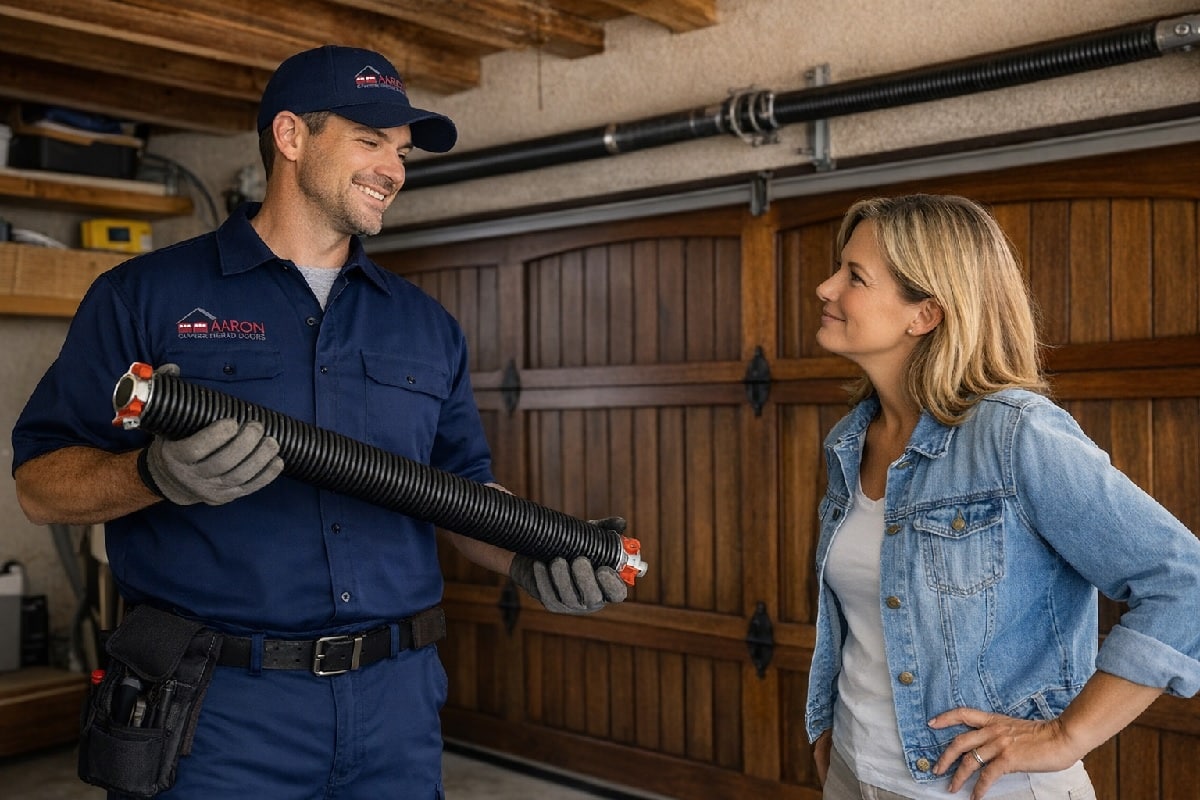
Torsion store mechanical energy by twisting around a steel shaft. Components include:
-
Torsion tube
-
Cable drums
-
Lift cables
-
Center bearing plate
-
Winding cones
They provide smoother operation and longer cycle life but require specialized winding bars and training to adjust safely.
Extension Spring System
Extension springs stretch and contract along the horizontal track. They include:
-
Safety cables (required by code in California)
-
Pulleys
-
Eyebolts
These are less expensive but generally wear out faster and create more vibration.
Safety Considerations
Garage door springs are under extreme tension and can cause serious injury if handled improperly. Torsion springs, in particular, require precise winding and specialized tools.
Key safety reminders:
- Never attempt to adjust or replace springs without proper training
- Always ensure extension systems have intact safety cables
- Keep a safe distance if a spring breaks, it can release force suddenly
Typical Lifespan of Garage Door Springs
Most standard springs are rated for about 10,000 cycles (one cycle = one open and close). For the average homeowner, that translates to roughly 7–10 years of use.
However, higher-cycle options are available:
- 20,000-cycle springs for moderate use
- 30,000+ cycle springs for high-traffic households
Upgrading to high-cycle springs is a smart long-term investment, especially for families who use their garage as the primary entry point.
Why Coastal Conditions Matter from Monterey to Santa Cruz
Homes along the Central Coast deal with salt air, moisture, and fluctuating temperatures. These environmental factors accelerate corrosion on metal components, including springs. Over time, rust weakens the steel, increasing the likelihood of premature failure.
For coastal homes, it’s often recommended to use:
- Galvanized or powder-coated springs for corrosion resistance
- Regular lubrication with a silicone-based or marine-grade product
- More frequent inspections compared to inland homes
Don’t Wait for a Snap!
A broken spring is a major safety hazard and a total inconvenience. If you see rust or hear straining, play it safe and call Aaron Overhead Doors at 831-219-8648 to schedule a professional safety inspection or contact us online with any questions.